
UX Research & Design - TRIUMF
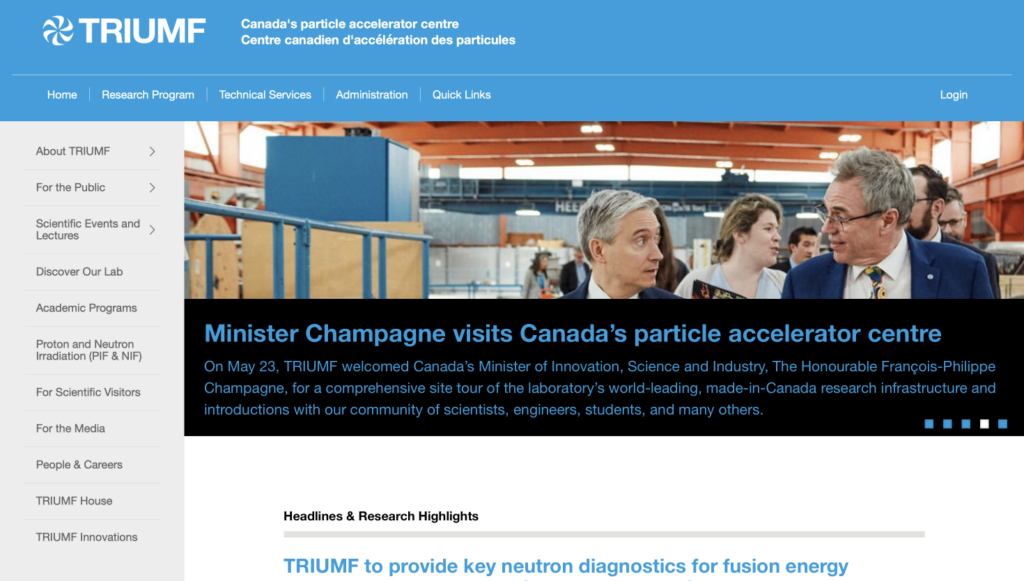
During my internship at TRIUMF, Canada’s particle accelerator centre, I lead a UX Research study aimed at enhancing the user experience of their website. My primary focus was on strategizing a comprehensive redesign and reorganization of their external-facing web platform.
Timeline: 4 months
Team: In-house team of two
Skills: Card-sorting, Interviews, Focus groups, Analysis, Wireframing
Results:
What is TRIUMF's Website for?
TRIUMF, Canada’s particle accelerator centre, relies on its website for recruitment, funding, education, business, and public disclosure. With a broad portfolio of scientific research and commercial partnerships, their website serves as a vital hub for international engagement.
Research Questions
- How can TRIUMF.ca be useable for such a diverse and wide audience?
- What are the priorities for the different audience segments?
- What does the scientific lab website landscape look like? What are patterns that users will recognize?
- What do internal stakeholders value the most from this website? What is crucial to TRIUMF?
- How can we conduct this research without access to the parts of the audience navigating the site?
Approach
I began the process by devising a UX research sprint plan. This plan included conducting interviews with key stakeholders to define the project’s scope and expectations, organizing focus group sessions involving diverse audience segments and internal groups, and facilitating a card sorting session.
UX Research Techniques
Five focus groups were engaged, strategically incorporating staff from various departments and divisions. Each group participated in a one-hour session encompassing structured questions, a card sorting exercise, and an open discussion.
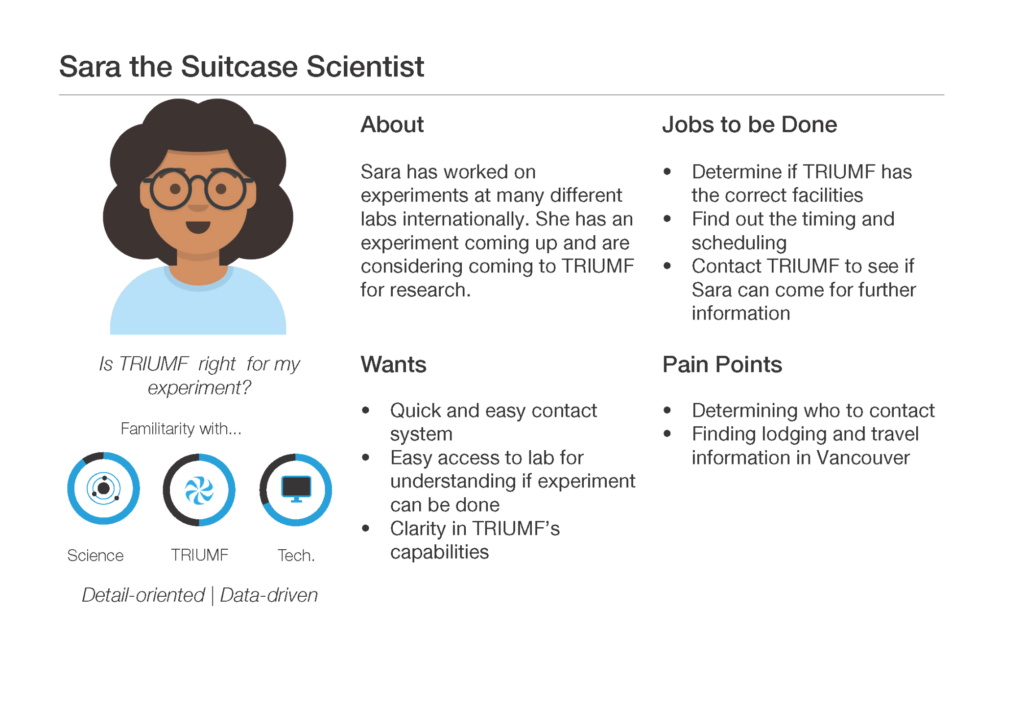
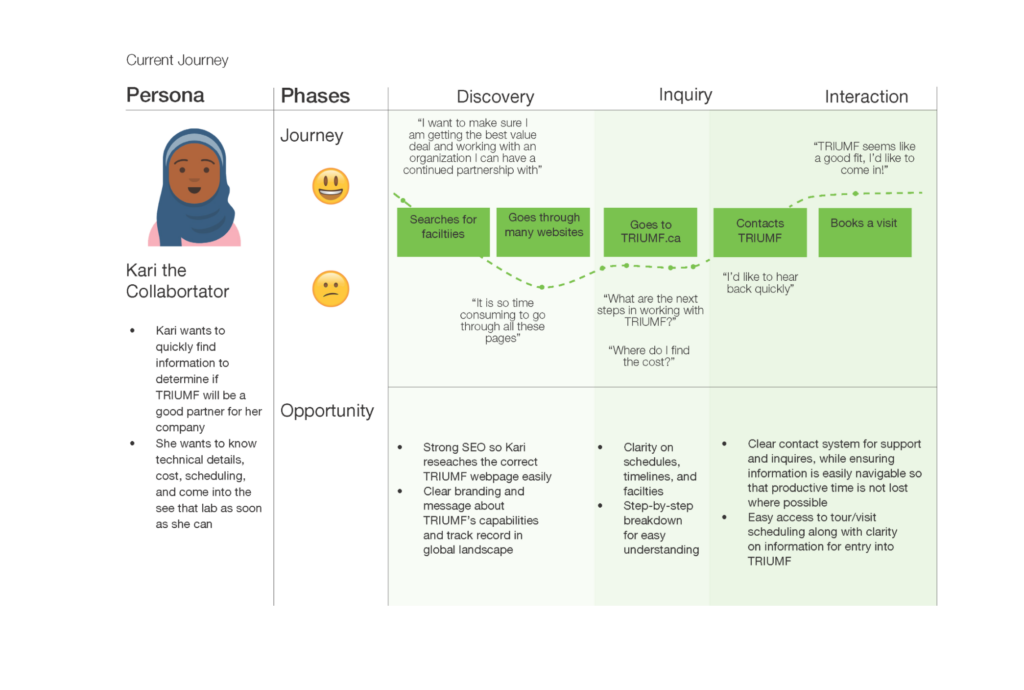
The gathered insights, coupled with findings from previous interviews with the executive leadership team, were then employed to construct personas and user journey maps. This contextualization aimed to pinpoint opportunities for streamlining workflows and enhancing user experience on the website.
Results & Next steps
The initial phase wrapped up with the creation of a UX research report, the development of a comprehensive requirements document, and the design of a Figma wireframe to provide stakeholders with a clear visualization of the project scope. Subsequently, this package was presented to key stakeholders to secure their approval for advancing the project. Presently, the project is underway in an agile environment. I’m taking charge of the design phase, leveraging my prior success in UX research and strategy, which earned me an outstanding student evaluation for my internship and lead me to return full time at TRIUMF.