
The Welcome Wagon - Research & Design
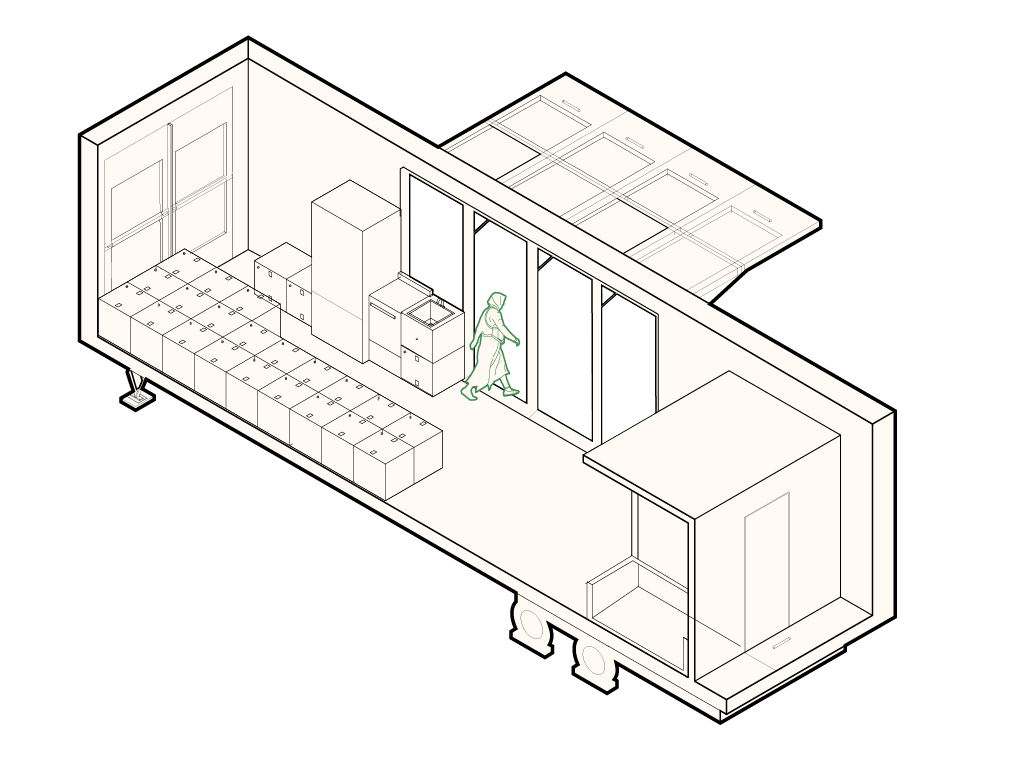
For my third year Design Studio, I was challenged with creating a housing system that is designed for adaption and construction by its users. This project involved secondary research and iterative designing. Our system consists of a mobile smart core which contains a kit of parts for a self-build house.
Timeline: 3 months
Partner: Hiba Zubairi
Skills: Secondary research, branding, storyboarding, 3D modeling, architectural design, graphic design, illustration
Results:
Background
The initial research for the project consisted of a wide evaluation of architectural systems which have adaptable both over time, and through use. We strived to find solutions which were either self build or hackable to understand how users can engage with architecture.

Left: (1) Trailer Park Homes, Leah Nash, 2009 (2) Nest We Grow, Kengo Kuma, 2014, (3)Ecolab, Office of Mobile Design, 1998, (4) Portable House APH80, Abaton Arquitectura, 2014, (5) An Australian Tiny Home, CABN 2017, Residence Huga, Grandio, 2019, (5) Ibtasem Playground, Catalyctic Action, 2015 Right: (1) Expandable House, Urban Rural Systems, 2018, (2) Beirut Blast, Rami Rizk, 2020, (3) PH – Paroissien Home, Ottone-Victorica Arquitectos 2020, (4) Protohomes, 1969-70s, (5) Chicago Archiecture Biennial, Tatiana Bilbao, 2015, (6) Road Runner, Office of Mobile Design, 2006, (7) Mosque-Cathedral of Cordoba, 785-1575, (8) Versailles Apartment, Catseye Bay Design, 2016 In both cases, citations are listed left to right, and top to bottom (in that order).
Project Context
People from all over the world can be found in Canada, practicing their own cultural traditions and proudly honing their identities while successfully operating within Canadian society. However, certain factors in our built environment and wealth distribution patterns forces Canadian immigrants to remain in less than satisfactory, expensive and undignified housing. From small one bedroom apartments housing five member families to basements being occupied by seven to eight young people, the plethora of cultural exposure, strength of community and available resources are significantly stunted for immigrants who cannot afford housing in an increasingly steep market.
The Welcome Wagon, beta tested in Almonte, Ontario, is a community settlement scheme which seeks to provide immigrant families the ability to maintain their strong cultural networks while also increasing their likelihood of employment, self-run businesses, home ownership and class mobility. For this reason, the program is specifically geared towards new immigrants who are having trouble finding jobs and providing a sustainable income for their dependents.
Frameworks
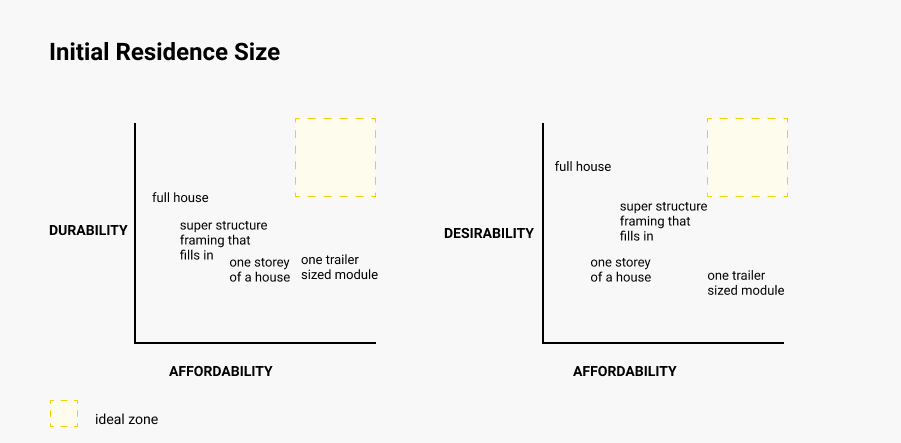
Based on the housing types and descriptions found through our reserach, my partner and I sketched out base frameworks to help us understand the direction to move forward in based on our constraints and users.
Persona Map
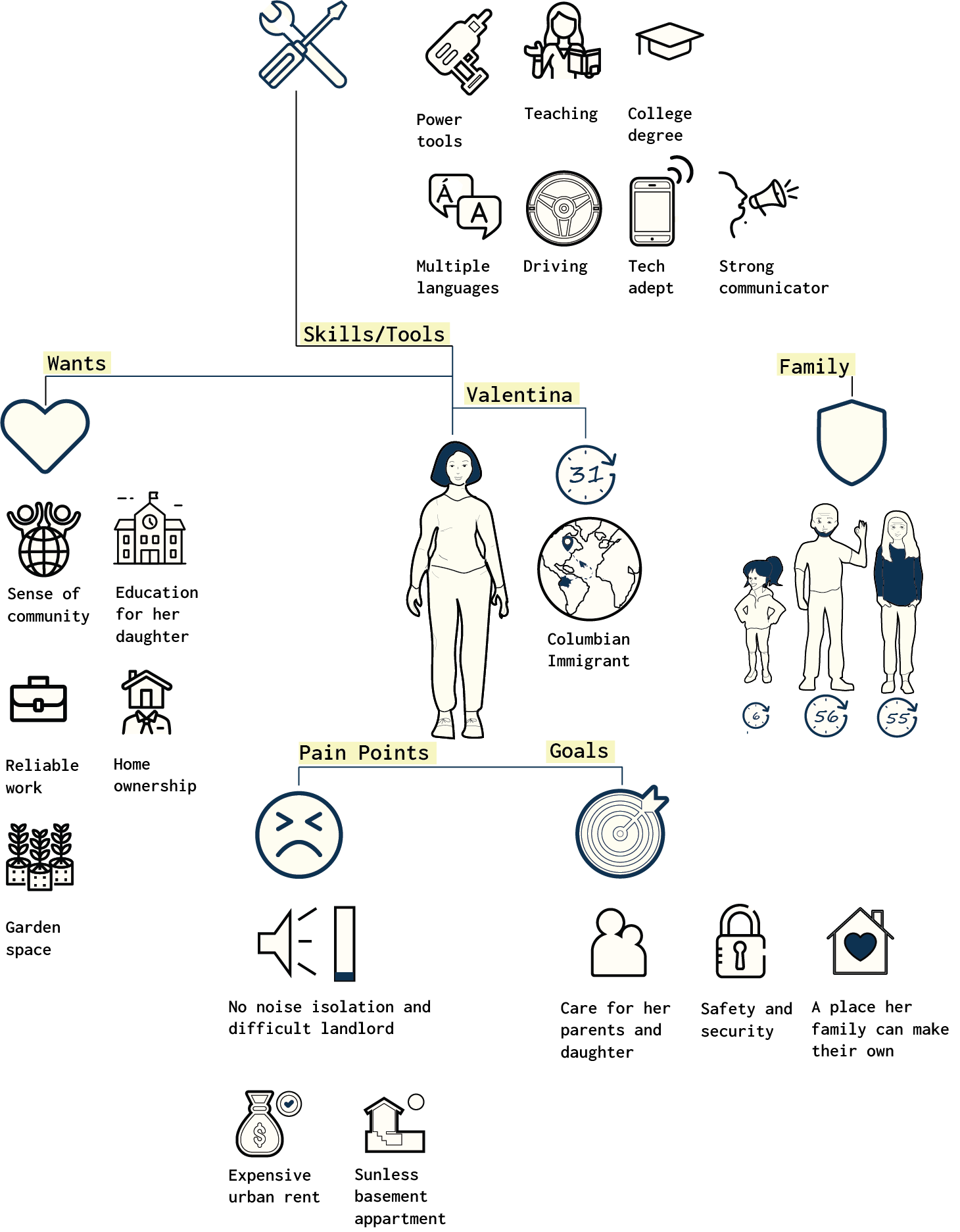
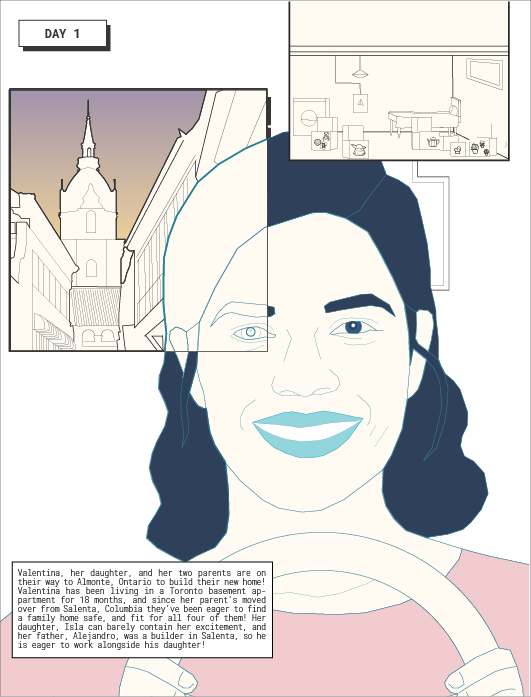
Based on our research I created an illustration for the persona of Valentina Acuna. She is a 31 year old Columbia born immigrant with a six year old daughter, and two middle-aged parents.
Her primary goals are finding a safe neighbourhood for her daughter and a community where her whole family feels like they belong and can contribute. Her current pains include lack of job stability, difficulty finding affordable options in the city, and an inhospitable landlord in her basement apartment. Her needs and desires include finding a place where she is able to make changes for her family as they grow and easily acessible greenspace for her parents to garden or homestead. She was a prior languages teacher so she is skilled in communication and translation. In Columbia, her father was a mason so she is familiar with power tools and unafraid of building, however she isn’t familiar with wood construction.
5 Principles of Design

These principles guided us through the design of the wagon, and represent the priorities of the project.
- Mobile Smart Core
- Flexible Grid
- Community Build
- Open Source
- Variable Affordability
Kit of Parts
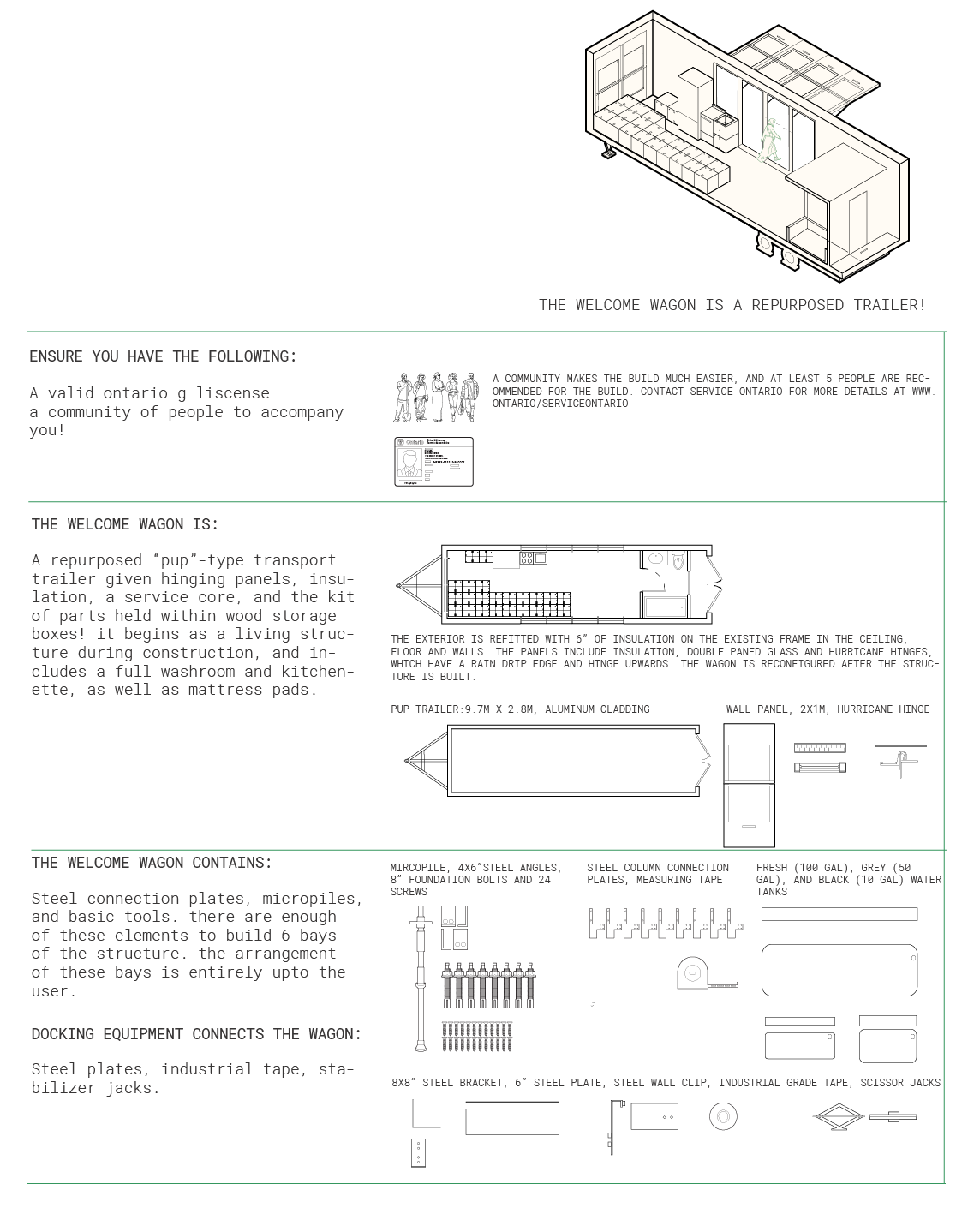
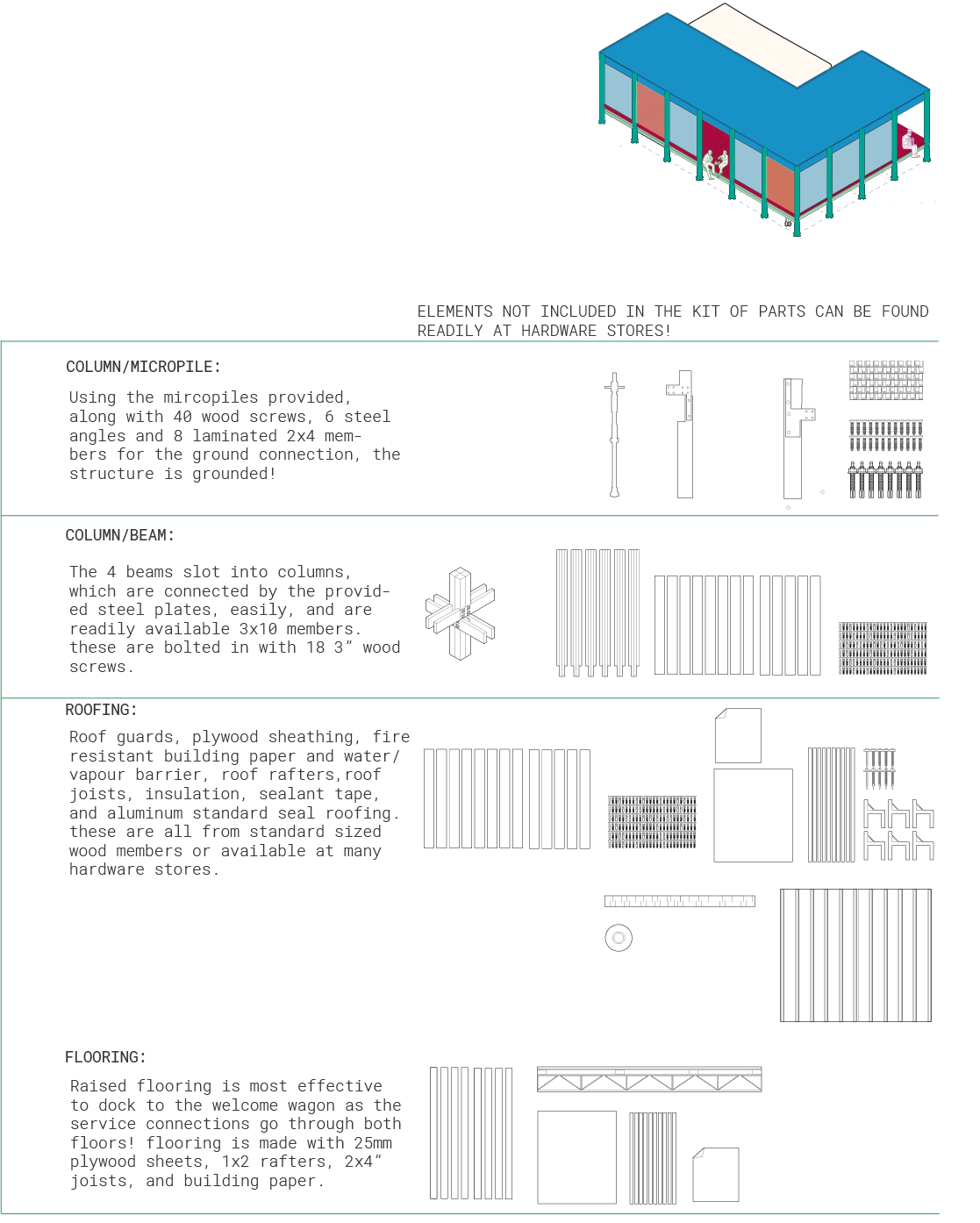
I created the Kit of Parts diagram to show the elements of the system and the breakdown between elements included in the inital smart core, and the open source elements which are included in a build guide given to residents.
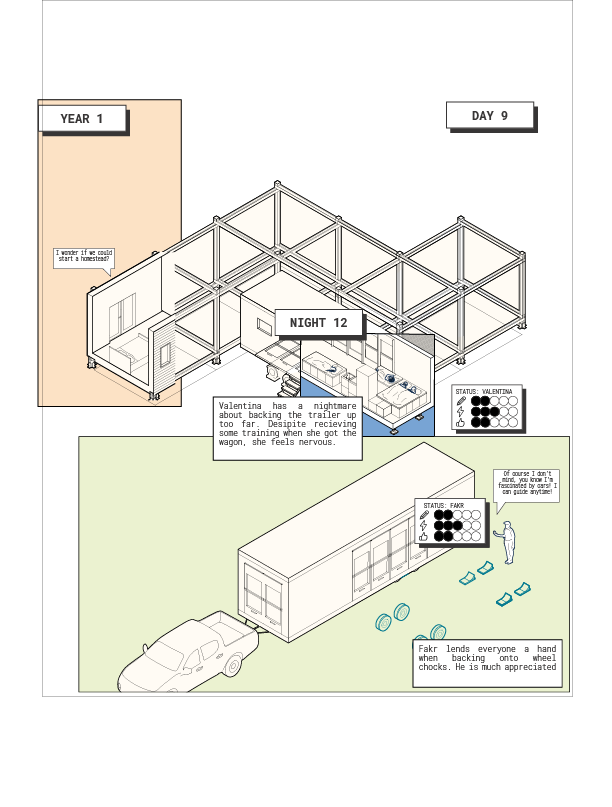
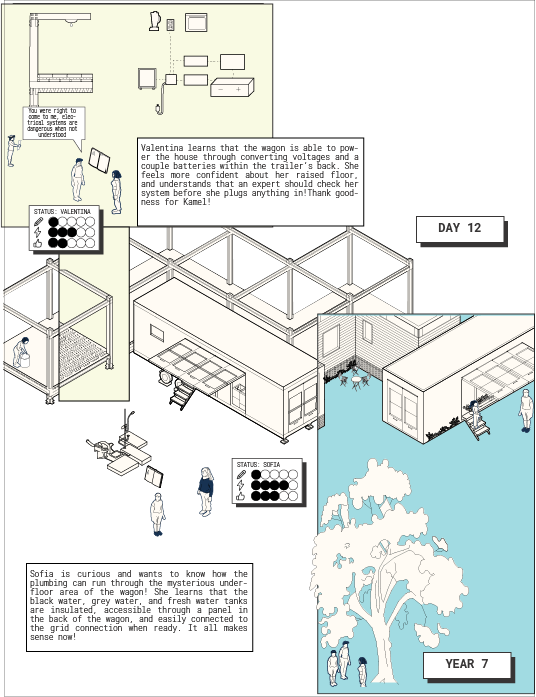
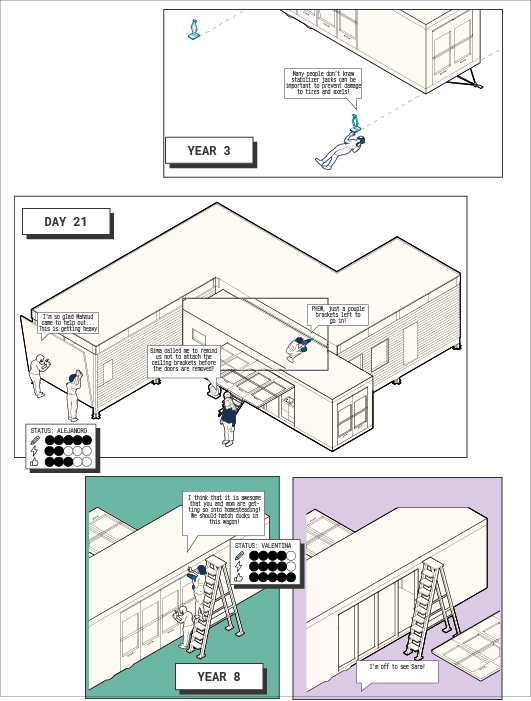
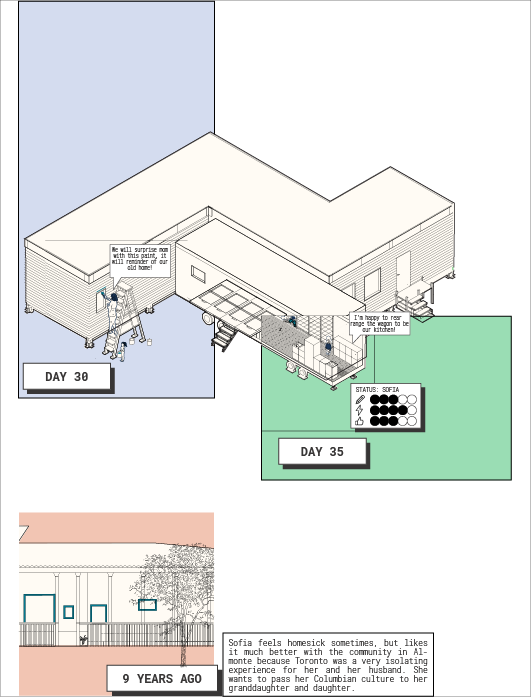
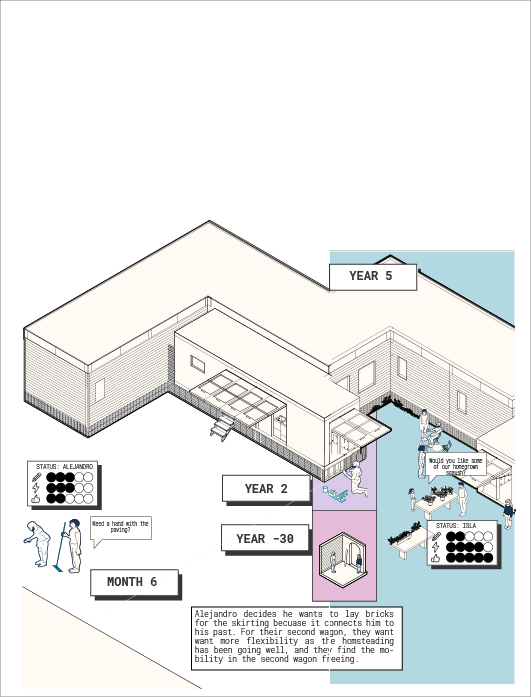
Self-build User Narrative
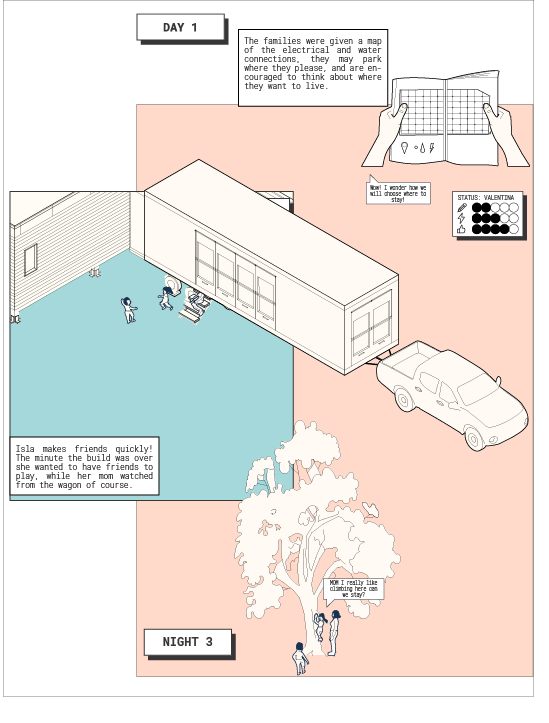
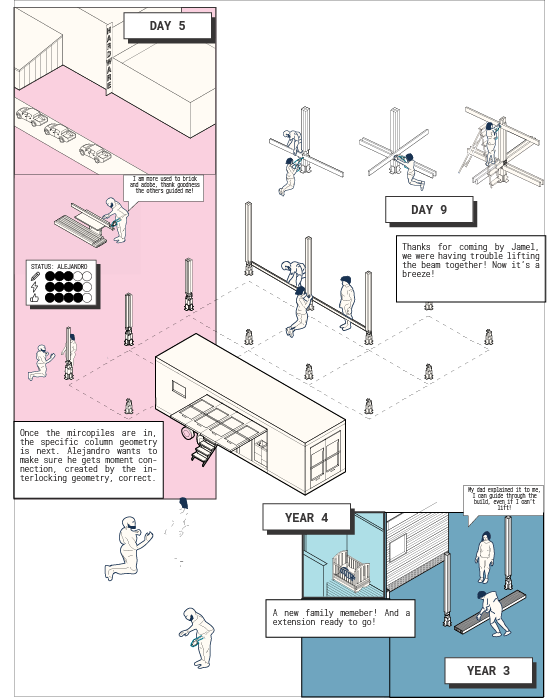
I created the following narrative, in collaboartion with my partner in formating and developing the visual style, to represent the build journey of the persona Valentina Acuna.
Next Steps & Evaluation
If we were to move forward with this project, we would beta test this with users using VR and further develop the 3D model we created as we were designing this system. Based on this feedback the system could be further refined and we would be able to verify some of the assumptions we had to make early on since primary research, such as user interviews, was not in the scope of this course.